The Subtle Revolution
Japan’s Influence on Western Culture


Over the past century, and with renewed intensity in the last few decades, Japanese philosophy and aesthetics have seeped deeply into Western life, shaping how we design our homes, understand creativity, approach wellbeing, and even think about the self.
I came at Japanese culture and aesthetics through Buddhism and Butoh dance and more recently, Japanese literature and poetry. It has undoubtedly had a huge impact on me and this Substack is testimony to that.
This rise in Japanese influence on Western culture is not a sudden fashion but a long, layered conversation between cultures, one that reveals as much about Western longing as it does about Japanese tradition.
From Japonisme to Modernism

The West’s fascination with Japan began in earnest in the mid-19th century, when Japan ended its long period of isolation and opened to international trade. Japanese prints, ceramics, textiles, and everyday objects flooded European markets, igniting the movement known as Japonisme. Artists such as Van Gogh, Monet, Whistler, and Degas were captivated by ukiyo-e woodblock prints; their flattened perspectives, bold cropping, and intimate attention to ordinary life.
What Japan offered Western modernity was not simply new motifs, but a radically different way of seeing. Japanese aesthetics challenged the dominance of realism and linear perspective, opening the door to modern art’s break with representation.
Wabi-Sabi and the Beauty of Impermanence

If Japonisme was about visual influence, the late 20th and early 21st centuries have been about philosophy. Central among these imports is wabi-sabi: the aesthetic and ethical embrace, rooted in Zen Buddhism, of impermanence, imperfection, and incompleteness.
In a Western culture shaped by progress, polish, and permanence, wabi-sabi arrived as both balm and critique. It resonated deeply in a world exhausted by consumer perfection and digital sheen. The popularity of handmade ceramics, visible mending, raw interiors, and slow craft movements all echo this sensibility. So too does the rise of philosophies that frame ageing, decay, and loss not as failures, but as natural processes worthy of attention and care.
Zen, Mindfulness, and the Search for Stillness
Perhaps the most influential Japanese philosophical export to the West has been Zen Buddhism. Introduced more systematically in the 20th century through figures such as D.T. Suzuki, Zen captured the imagination of artists, writers, and spiritual seekers alike. Its emphasis on direct experience, meditation (zazen), paradox, and non-duality offered an alternative to both Western rationalism and institutional religion.
By the mid-century, Zen had shaped the Beat poets, experimental composers like John Cage, and architects seeking clarity and restraint. In more recent decades, Zen principles have been reframed within the mindfulness movement (sometimes stripped of their ethical and metaphysical depth, but still carrying traces of their origins). The Western hunger for presence, silence, and attention is inseparable from this Japanese lineage.
Architecture, Space, and the Power of Emptiness

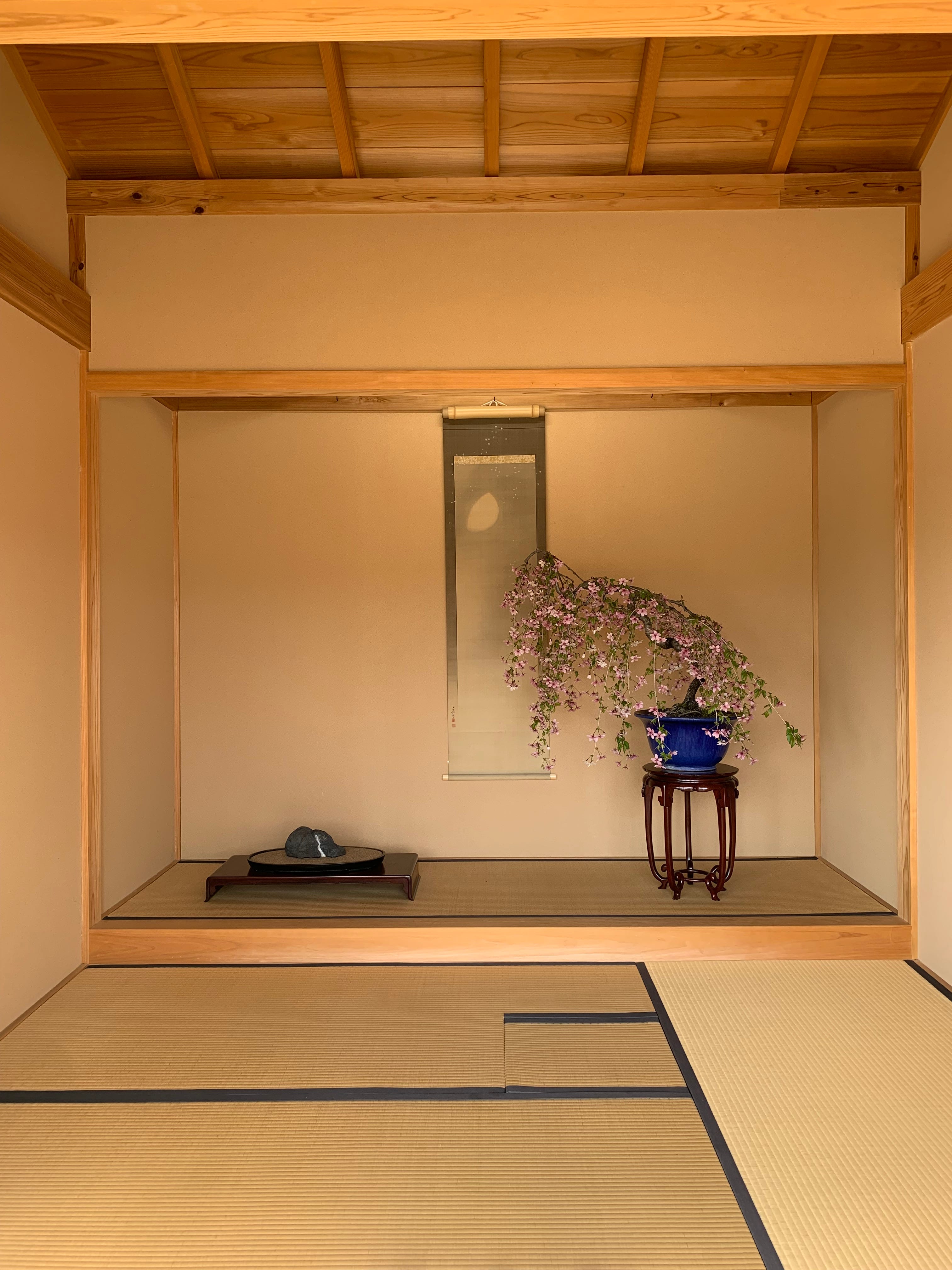
Japanese aesthetics also transformed how the West understands space itself. Traditional Japanese architecture privileges emptiness (ma), flexibility, and the intimate relationship between inside and outside. Sliding screens, modular rooms, and asymmetry encourage movement, adaptability, and awareness.
Modernist architects such as Frank Lloyd Wright, himself an avid collector of Japanese art, absorbed these principles, while contemporary designers continue to draw on Japanese ideas of lightness, simplicity, and flow. In a crowded, overstimulated world, the Japanese approach to space feels radical: it suggests that what is left out matters as much as what is included.
Literature, Translation, and Interior Worlds

Japanese philosophy and aesthetics have also entered Western consciousness through literature. The global success of writers such as Jun’ichirō Tanizaki, Yasunari Kawabata, Kenzaburō Ōe, Banana Yoshimoto, and more recently Hiromi Kawakami and Sayaka Murata has introduced Western readers to narratives that prize mood over plot, ambiguity over resolution.
Tanizaki’s In Praise of Shadows, a meditation on darkness, subtlety, and restraint, has become a touchstone for designers and writers alike. Meanwhile, contemporary Japanese fiction often explores alienation, ritual, and quiet rebellion within everyday life, mirroring Western anxieties while offering a distinctly different tonal register.
Everyday Rituals and the Ethics of Care

Beyond art and philosophy, Japanese aesthetics have reshaped the Western approach to everyday life. Practices such as tea ceremony, calligraphy, flower arranging (ikebana), and even bento-making have been embraced not merely as hobbies, but as philosophies of attention and care. Central to these traditions is the idea that ordinary acts, preparing tea, arranging a room, sweeping a floor, can be sites of meaning.
This resonates strongly in a time when many feel alienated from their labour and distracted from their lives. Japanese aesthetics offer an ethic of presence: do one thing, with care.
A Mirror for Western Longing
The Western embrace of Japanese philosophy and aesthetics is not without complication. At times it risks simplification, commodification, or romanticisation; a gentle spirituality marketed as lifestyle, stripped of historical and cultural specificity. Yet its persistence suggests something deeper than trend.
What Japan has come to represent in the Western imagination is a counter-narrative: a way of living with transience rather than conquering it, of finding meaning in restraint, of honouring silence in a noisy world. In an era of climate crisis, burnout, and technological saturation, these ideas feel not exotic, but necessary.
The rise of Japanese philosophy and aesthetics in the West is ultimately a story of encounter between cultures, but also between values. It asks whether beauty can be quiet, whether success can be small and simple, whether imperfection is more honest and more real. And in the space of that question, a subtle revolution continues.